I came to this through generative art. I was watching what was happening on fxhash — the wave of artists making one-of-one pieces with code, each output unique, the program itself the author. I had spent years buying editions; this was something else. I started learning to code, badly at first, then less badly.
I also tried to live with the work I was buying. Generative art lives on screens, and the wall-display devices built to show it have not solved the problems paper solved centuries ago. Expensive, glare-prone, reliably wrong. No market leader. Software cycles that outdate within years. So I started printing the pieces I bought. They didn’t survive the translation. The colour was flat, the marks were thin, the wall lost what the screen had.
That was a problem that wouldn’t leave me.
Around the same time, I was experimenting with sound and frequency. Geometric forms were a recurring theme. I started drawing them. The more I looked at them, the more they suggested sound.
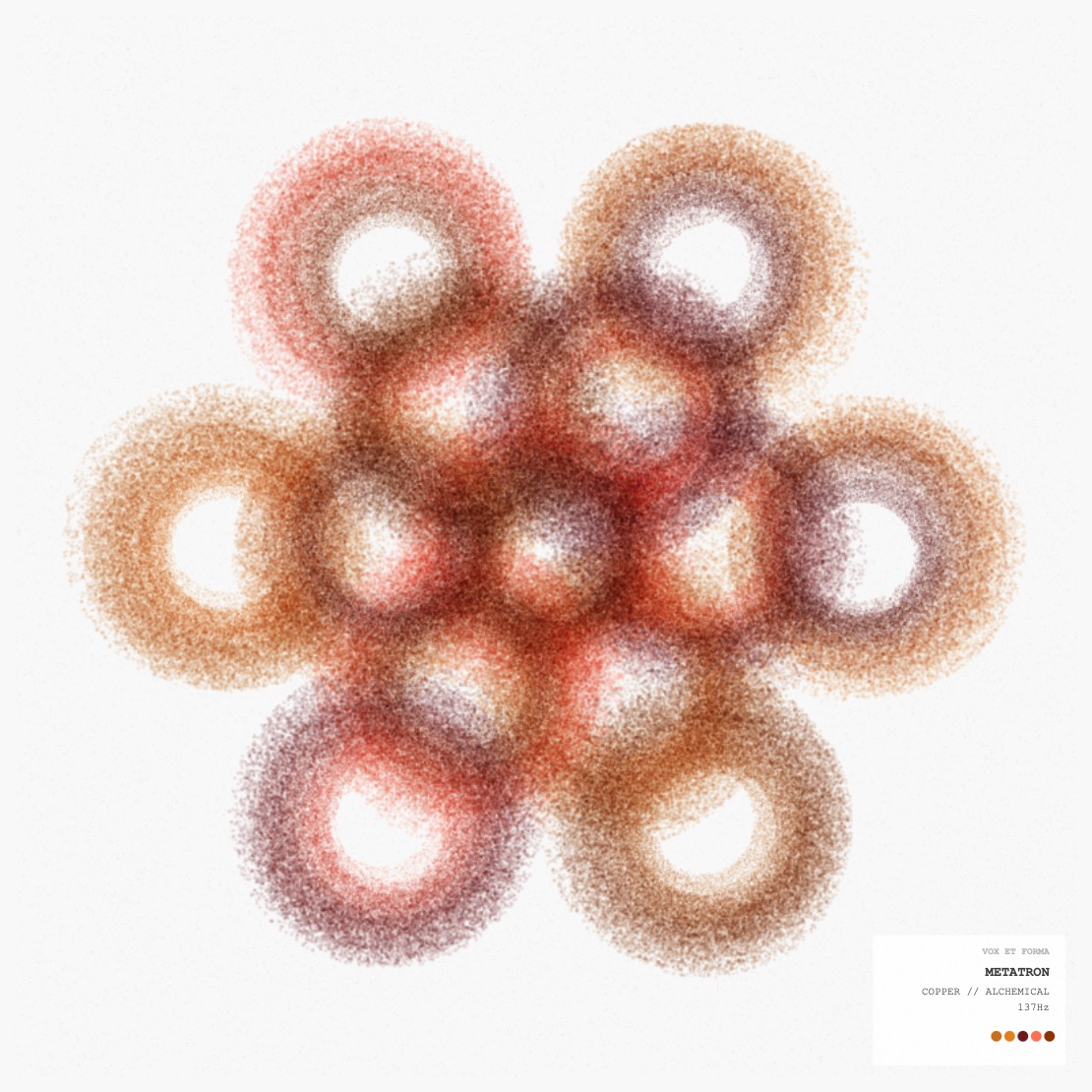
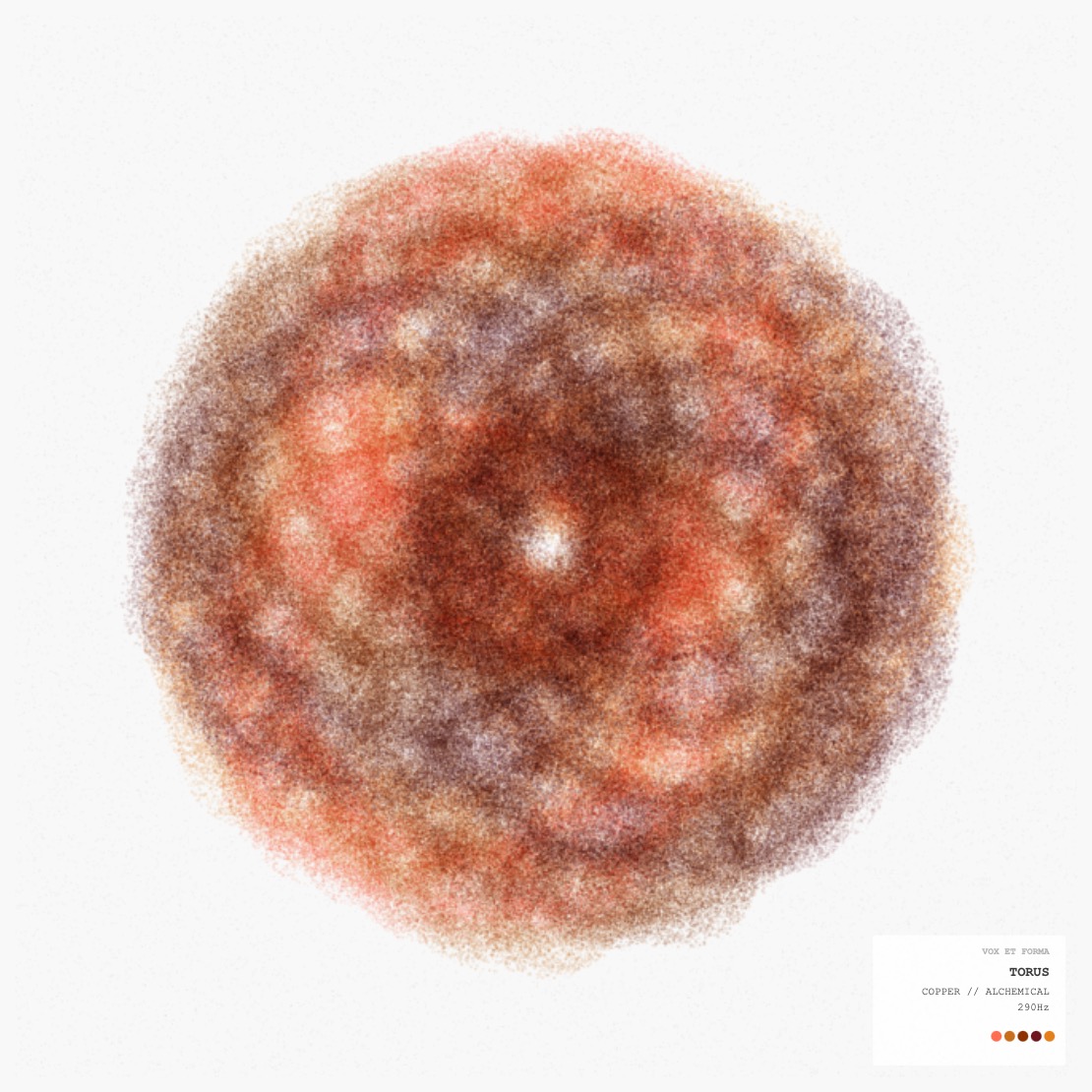
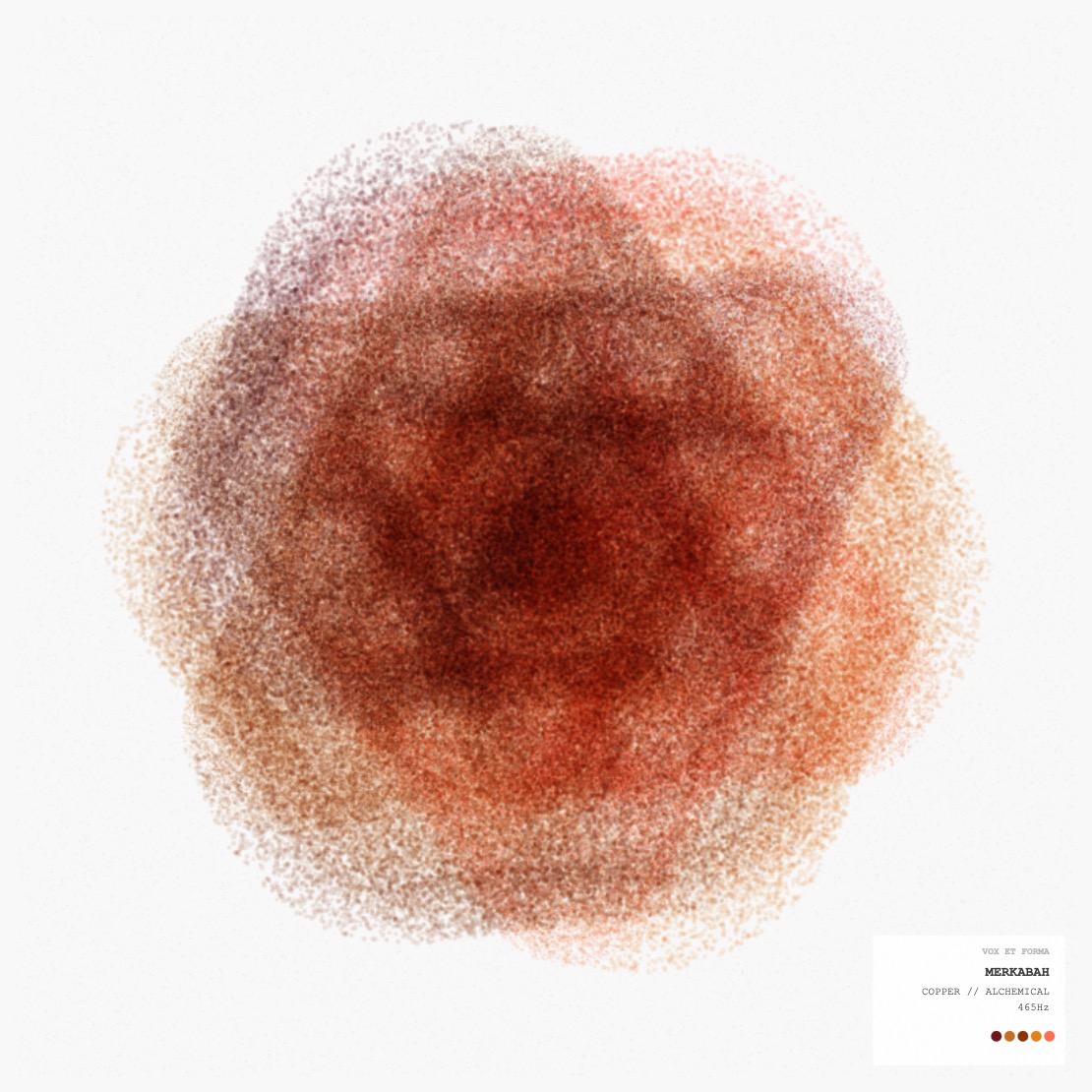
Colour was the third thread. I’d been thinking about it from the start without naming it. Code lets you treat colour as a system rather than a choice. And pointillism does something a flat fill cannot: place two dots near each other and the eye mixes them into a third. Combine that with the structure of the geometry, and the result has a depth and rhythm that flat colour cannot reach.
The piece almost moves.
The threads met.
The voice would be the seed, a personal frequency rather than a random number.
And the technique would be pointillism — discrete marks of ink, executed at computational scale, designed to survive print.
The screen would be a step in the process, not the destination.
The moment Vox et Forma began.